18 de September de 2026
Citizen science in health: co-creating knowledge with people to tackle real-world challenges
Citizen participation as a key element for research more connected to society
Health research faces complex challenges that require the integration of different perspectives and forms of knowledge. Chronic diseases, health inequalities, the transformation of healthcare services, or the incorporation of new technologies and innovations are challenges that cannot be addressed from a single discipline, but also require understanding the experiences, needs and contexts of the people involved.
In this context, citizen science in health enables the active participation of patients, caregivers, health professionals and citizens across different stages of the scientific process, collaborating with research teams in the generation of knowledge. This participation can range from identifying needs and defining research questions to data collection, interpretation of results or communication of findings.
The value of incorporating different voices into health research
The participation of patients, citizens and other stakeholders within the healthcare ecosystem provides distinctive value because it allows dimensions of the health-disease process to be incorporated that are not always reflected in clinical data or traditional research outcomes.
People living with a disease, using healthcare services or facing access barriers provide fundamental knowledge to understand how health issues are experienced in everyday life. This perspective can contribute to identifying needs and priorities, improving study design, adapting materials and interventions, and supporting the interpretation of results from a perspective closer to people’s realities.
Participation does not replace scientific knowledge or professional expertise, but rather complements them by incorporating knowledge derived from lived experience. This is particularly relevant in complex health challenges, where social, cultural, economic and organisational factors can influence both people’s experiences and intervention outcomes.
Moreover, incorporating these perspectives from the early stages of research can help identify barriers that may limit the impact of results, such as access difficulties, unmet needs or challenges related to understanding and using healthcare services. To achieve this, it is necessary to develop rigorous, inclusive and safe participatory processes, especially when working with sensitive data or people in situations of vulnerability.
From participation to impact: integrating scientific knowledge and lived experience in health
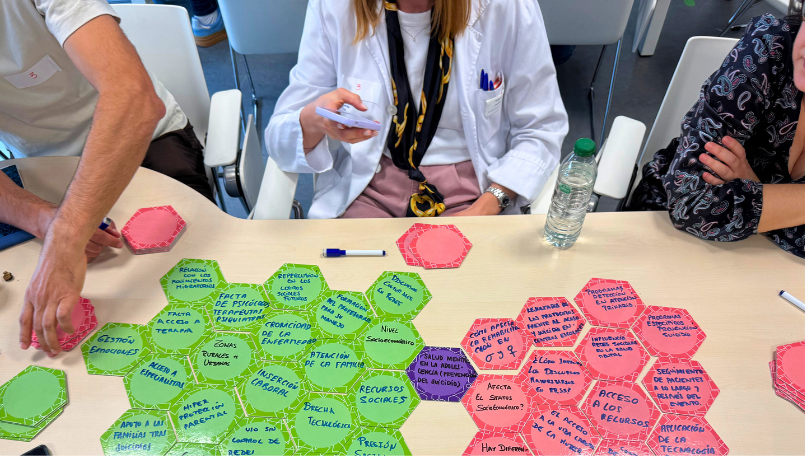
For citizen participation to generate real value, it is not enough to incorporate occasional opinions: it is necessary to design structured processes that define when and how each stakeholder can contribute meaningfully.
In the healthcare context, these processes must adapt to the specific characteristics of health research, especially when people in diverse situations participate and sensitive information is involved. Therefore, they require rigorous methodologies that ensure the protection of individuals, the quality of the information collected, and collaborative relationships based on trust, transparency and respect for research ethics principles.
From the Health and Social area of Science For Change, we work to facilitate these collaborative processes in research, health and social services, and evidence generation for decision-making. We support research teams, institutions and organisations through citizen science, collaborative research and co-creation methodologies, creating spaces where citizens, patients, professionals and other relevant stakeholders can contribute to addressing complex health and wellbeing challenges.
When citizen participation is integrated rigorously and meaningfully into research processes, it contributes to generating knowledge that is more connected to real needs and has greater capacity to respond to current health challenges.
Would you like to incorporate the perspective of patients and citizens into your research project, service or health strategy? Contact the Health and Social Area of Science For Change at agostina.bianchi@scienceforchange.eu and discover how we can help you design collaborative processes with impact.
By Agostina Bianchi - Head of the Health and Social Area → More information
Compartir en